
Updated — 17/01/2025 — Microsoft announced the Well-Architected Framework for AI Workloads. This includes a free AI workload online assessment and recommendations that are based on Azure Well-Architected Framework principles and include insights from successful Azure implementations.
In the ever-evolving landscape of cloud computing, designing and deploying effective Azure workloads requires a meticulous approach. Success depends on leveraging proven methodologies like Microsoft’s Azure Well-Architected Framework.
The Azure Well-Architected Framework in cloud architecture provides a structured approach to building efficient and resilient systems. By focusing on key pillars such as cost management, performance, and security, this framework guides organizations in optimizing their cloud investments while maintaining operational integrity.
This comprehensive guide aims to help you architect successful workloads on Azure, focusing on the latest best practices.
Table of Contents
Understanding the Azure Well-Architected Framework
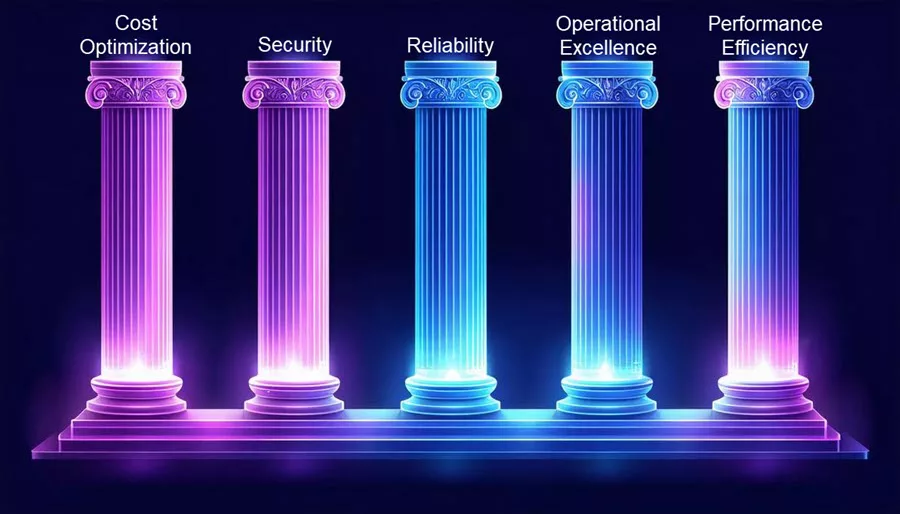
The Azure Well-Architected Framework is based on the following five pillars:
1. Cost Optimization: Balancing performance and expenses to maximize ROI.
2. Performance Efficiency: Ensuring workloads adapt to changes in demand seamlessly.
3. Reliability: Building systems that handle failures and recover gracefully.
4. Security: Protecting workloads from threats and unauthorized access.
5. Operational Excellence: Streamlining deployment, monitoring, and management.
These pillars help solution architects and engineering teams enhance workload performance.
Detailed Insights into the Pillars
Let’s get into the details of each pillar:
* Cost Optimization involves maximizing the value of cloud investments while minimizing expenses. This includes evaluating resource provisioning, budgeting, and efficiently using virtual machines or containers.
* Performance Efficiency ensures workloads adapt to changing demands. It emphasizes configuring systems to handle load changes automatically, especially during peak periods. Key aspects include performance testing, monitoring, and responding to threshold breaches.
* Reliability focuses on workload resilience and recovery from failures. It involves setting up systems that anticipate potential issues to maintain uptime. This may include redundancies through additional regions, availability zones, or backup mechanisms.
* Security protects workloads against threats, ensuring data integrity and confidentiality. It includes practices like access management, encryption, and regular security assessments.
* Operational Excellence focuses on effective workload management, including deployment, monitoring, and maintenance processes. It encourages automating tasks and establishing monitoring systems to catch potential issues early.
The framework emphasizes ongoing refinement and periodic reviews to ensure systems remain aligned with business goals and technological advancements. It also highlights the need to balance trade-offs among the pillars, as enhancing one aspect may affect others.
Balancing the Five Pillars
Achieving optimal outcomes often requires balancing trade-offs:
- Reliability vs. Cost: Increasing redundancy improves reliability but raises costs.
- Performance vs. Operational Complexity: High-performance architectures may demand complex setups.
- Security vs. Usability: Strong security measures may require more user training.
Example: For an e-commerce site, prioritize performance and reliability during peak sales while optimizing costs during off-peak periods.
Steps to Architect Successful Workloads on Azure
Let’s get into the steps to architect successful workloads on Microsoft Azure:
1. Understand Business Requirements
Key Questions:
- What are your workload’s primary goals?
- How will success be measured (e.g., SLA, availability, cost)?
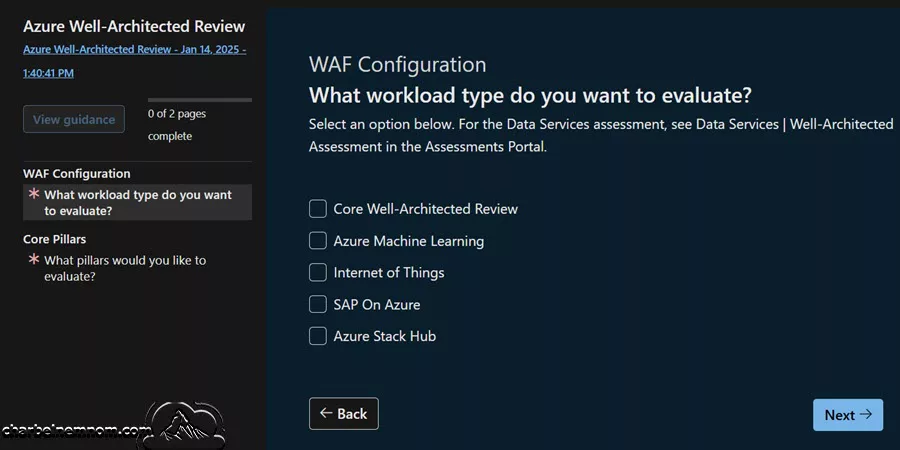
We can use tools like the Azure Well-Architected Review to assess the starting point.
2. Design for Scalability and Performance
Scalability: Employ auto-scaling features such as Azure Scale Sets for VMs and Kubernetes.
Performance: Optimize applications with Azure Front Door, Content Delivery Network (CDN), and Application Insights.
Tip: Simulate high-demand scenarios (e.g., Black Friday or Holiday Seasons) to test workload resilience.
3. Build Resilient Systems
Leverage availability zones and redundant storage to minimize single points of failure.
Use Azure Backup and Azure Site Recovery (ASR) for disaster recovery.
Implement retries and fallbacks in application logic.
4. Optimize Costs
Use Azure Cost Management to track and reduce expenses.
Enable features like auto-shutdown for non-critical VMs.

Use reserved instances and Azure savings plans for predictable workloads to save costs.
See Also: Azure Savings Plans vs Reservations: Choosing the Best Cloud Computing Option
Optimize by region: Choose Azure regions that offer cost benefits.
5. Prioritize Security
Use Microsoft Defender for Cloud and Microsoft Sentinel to monitor workloads continuously.
Implement Azure Role-Based Access Control (RBAC) and enforce the principle of least privilege.
Protect sensitive data with Azure Key Vault and encryption.
6. Enable Operational Excellence
Automate deployments with Infrastructure-as-Code (IaC) tools like Azure Resource Manager (ARM) templates, Terraform, or Bicep.
Set up robust monitoring with Azure Monitor and Log Analytics.
Conduct regular health checks and audits.
Tools and Resources to Get Started
The tools and resources to get started with architect successful workloads on Microsoft Azure:
1. Azure Well-Architected Review: Identify gaps and opportunities in your workloads.
2. Azure Advisor: Get personalized cost, performance, and security recommendations.
3. Azure Blueprints: Deploy consistent environments aligned with organizational standards.
4. Azure Resource Graph: Gain insights into your Azure environment for better decision-making.
Azure Advisor and Its Role in Optimization
Azure Advisor provides actionable recommendations that align with the Well-Architected Framework. It analyzes telemetry data from Azure resources to generate specific recommendations for:
- Cost efficiency
- Reliability
- Security
- Performance
- Operational excellence

The tool organizes recommendations according to the five pillars of the Well-Architected Framework, allowing organizations to prioritize actions based on their strategic goals. It also features alerting capabilities and periodic recommendation digests to inform IT teams of critical issues.
Azure Advisor’s scoring system quantitatively measures how well an organization aligns with Azure’s best practices. This score helps track improvement over time and identifies areas requiring further attention.
By leveraging Azure Advisor’s insights, Cloud Solution Architects (CSA) and IT teams can maintain a proactive stance on workload management, ensuring that their Azure deployments evolve to meet current and future demands.
Leveraging Azure Advisor Score
Azure Advisor Score comprehensively measures an organization’s adherence to Microsoft’s cloud architecture best practices. It offers a nuanced assessment that considers the impact and priority of each recommendation.
Organizations can use the Azure Advisor Score to gain a clear overview of their cloud computing posture across the five pillars of the Well-Architected Framework. This segmented approach allows IT leaders to focus their efforts on specific areas needing improvement.

By setting regular review cycles and integrating the Advisor Score into routine operations, businesses can maintain a proactive approach to cloud management. This strategic use of the Azure Advisor Score helps align operational effectiveness with business objectives, driving long-term success in the cloud.
Practical Application and Case Studies
Case Study: Trading and retail sector
A trading and an online retailer successfully optimized their Azure workloads by implementing the following:
- Cost Management: Reduced VM costs by leveraging auto-shutdown schedules.
- Performance Tuning: Used Azure Front Door to enhance site responsiveness during flash sales.
- Reliability Upgrades: Implemented geo-redundancy, achieving 99.99% uptime.
- Security Enhancements: Microsoft Sentinel was deployed to detect proactive threats.
Their journey underscores the importance of leveraging Azure’s ecosystem to build adaptable and secure workloads.

Case Study: Healthcare Sector
A healthcare organization migrating electronic health record (EHR) systems to the cloud utilized the Azure Well-Architected Framework to ensure compliance, security, and scalability. By leveraging Azure Advisor’s recommendations:
- They optimized costs by eliminating redundant disaster recovery infrastructures.
- Enhanced reliability with geo-redundant storage and automated backup processes.
- Boosted security with Microsoft Sentinel and encrypted patient data.

This strategic move improved operational efficiency and set the stage for integrating AI capabilities, enhancing decision-making, and reducing physician burnout.
In Conclusion
Architecting successful workloads on Azure is a continuous journey that demands a balance of technical expertise and strategic planning. By following the Azure Well-Architected Framework and adopting its pillars, you can ensure that your workloads meet business requirements while staying secure, scalable, and cost-effective.
Azure Advisor is a personalized cloud consultant that offers best practices and recommendations for optimizing Azure deployments, including cost-saving advice. It analyzes an organization’s Azure usage patterns and suggests ways to reduce costs, improve performance, enhance security, and ensure reliability.
The key best practices for long-term success:
- Continuous Improvement: Regularly revisit and refine your architecture to adapt to changing needs.
- Stay Educated: Use resources like Microsoft Learn and Azure’s Architecture Center to keep up with the latest advancements.
- Collaborate: Work with Microsoft partners and cloud solution architects to enhance your strategy.
__
Thank you for reading our blog.
Please let us know in the comments section below if you have any questions or feedback.
-Charbel Nemnom-
